
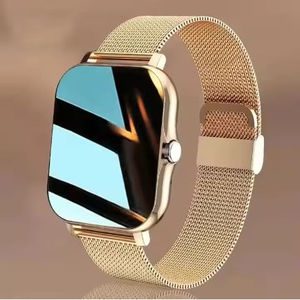
Quick Answer: How Should Importers Test Smartwatch Battery Life?
Importers should test smartwatch battery life under several real workloads, not rely on a single standby claim. At minimum, compare mixed daily use, Bluetooth calling, notification volume, screen brightness, GPS or sports tracking, charging time, idle drain and consistency across multiple samples. Record the firmware, app version and settings so the test can be repeated before bulk production.
Why Smartwatch Battery Claims Need Verification
Battery life is one of the first specifications buyers compare, but it is also one of the easiest to misunderstand. A quoted standby time may assume limited screen use, no calls and minimal sensor activity. A customer using an always-on display, frequent Bluetooth calls or outdoor tracking will see a very different result.
For B2B buyers, the goal is not to find one unusually strong sample. The goal is to confirm that the approved configuration performs consistently and that marketing copy describes a realistic use case.
8 Smartwatch Battery Tests Before a Bulk Order
1. Mixed Daily-Use Test
Create a repeatable routine with notifications, several screen checks, activity tracking and a short call. Run the same routine for at least two full charge cycles. This provides a more useful baseline than standby time.
2. Bluetooth Calling Test
Calling uses the speaker, microphone and wireless connection at the same time. Record battery reduction during a fixed call duration and confirm audio quality throughout the test.
3. Display and Brightness Test
Compare standard brightness with the highest practical setting. If the model supports an always-on display, test it separately and make sure sales materials do not mix the two results.
4. GPS or Sports-Mode Test
Outdoor tracking can consume substantially more power than ordinary step counting. Test a fixed-duration activity with the same satellite, display and heart-rate settings on each sample.
5. Notification Load Test
A watch receiving frequent calls, messages and application alerts wakes the screen and vibration motor repeatedly. Use a defined number of notifications per hour to compare samples.
6. Idle Drain Test
Charge the watch fully, disconnect it from the charger and leave it under controlled settings for 12 or 24 hours. Unexpected drain can indicate firmware, radio or battery consistency issues.
7. Charging-Time and Heat Check
Measure the time from a defined low-battery point to full charge using the supplied cable. Observe connector stability and unusual heat. The test setup should use the intended adapter specification.
8. Multi-Sample Consistency Test
Repeat the core tests on several samples from the same production configuration. Large differences matter more than a single attractive result because inconsistent batteries create returns and support costs.
Battery Test Record for Importers
| Item | Record |
|---|---|
| Product configuration | Hardware, battery capacity, firmware and app version |
| Phone environment | Phone model, operating system and permissions |
| Display settings | Brightness, wake behavior and always-on display |
| Connected functions | Calling, notifications, GPS, sensors and Wi-Fi where applicable |
| Test duration | Start time, end time and remaining percentage |
| Charging | Cable, adapter, charge time and temperature observations |
Common Mistakes in Smartwatch Battery Testing
- Testing only one sample.
- Comparing different firmware or app versions.
- Leaving screen and notification settings undocumented.
- Publishing standby time as typical daily battery life.
- Ignoring charging-cable quality and connector fit.
- Changing several settings at once and losing a clear baseline.
How Battery Testing Fits the Private-Label Process
Battery performance should be approved together with the full product specification. Once the buyer signs off on hardware, firmware, app, accessories and packaging, later substitutions should require written approval.
Use the private label smartwatch launch checklist to control the wider project. Buyers still comparing features can review how to choose the best smartwatch in 2026, while supplier evaluation is covered in our smartwatch supplier guide.
Frequently Asked Questions
How many smartwatch samples should an importer test?
There is no universal number, but relying on one sample does not show production consistency. Test multiple units and agree on a sampling method for pre-shipment inspection.
Should battery capacity be the main buying criterion?
No. Software efficiency, display behavior, wireless use and sensor activity all affect runtime. A larger stated capacity does not automatically produce a better user experience.
Can battery life be guaranteed for every user?
No. Usage patterns, phone connection, temperature, battery age and settings change the result. Marketing language should state the test conditions and avoid presenting one scenario as universal.
Final Checklist
Before bulk production, lock the approved configuration, repeat the same real-use tests across several samples, document the conditions and align product copy with verified results. To discuss an OEM or ODM smartwatch project, contact SmartByHJ with your target market, functions, quantity and testing requirements.
