
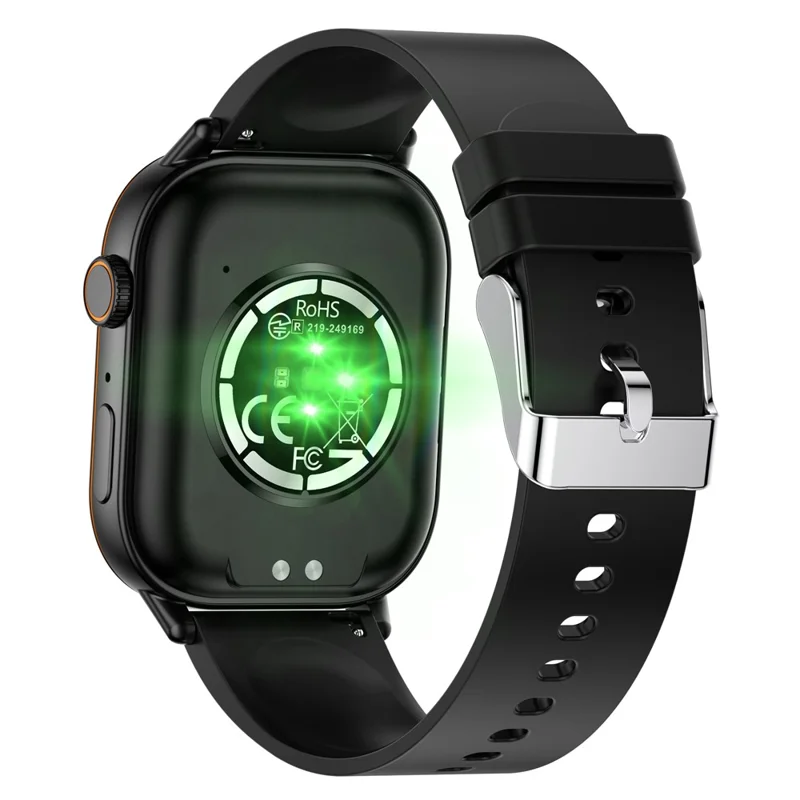
Quick answer: The right smartwatch supplier for Europe or North America is the partner that can prove product consistency, app readiness, packaging flexibility, communication speed, and a realistic compliance-document process before you place a bulk order. Price alone is not a reliable sourcing filter.
For importers, distributors, online retailers, and private-label brands, a supplier should reduce project risk from the first sample to repeat replenishment. This checklist explains what to verify during B2B smartwatch sourcing and how a Shenzhen-based project partner such as SmartByHJ can help coordinate the process.
1. Start with the market and use case
Define who will buy the watch, where it will be sold, and what daily problem it solves. A fashion-led retailer may need a slim case, neutral colors, and strong photography. A distributor may prioritize stable firmware, multilingual packaging, and a repeatable supply plan. A family-safety range may require location, calling, and alert workflows that are clearly explained without making medical or emergency-service promises.
Write a one-page brief covering target countries, sales channel, preferred functions, case and strap materials, language needs, packaging direction, and expected order cadence. This prevents suppliers from quoting different products against the same request.
2. Check the supplier’s product and sample process
Request a current sample before discussing a long-term program. Test charging, display readability, Bluetooth pairing, notification behavior, battery use in your intended mode, strap comfort, and the companion app on the phones your customers use. Ask whether the sample is a standard platform or a configurable starting point, and record every change requested between sample rounds.
- Ask for a sample checklist and a clear revision history.
- Confirm the production version will match the approved sample.
- Agree how defects, replacement parts, and warranty cases are documented.
3. Separate OEM, ODM, and private label support
OEM usually means adapting an existing product to your brand requirements. ODM can involve deeper changes to hardware, software, or industrial design. Private label may focus on branding, packaging, manuals, and sales assets. These terms are used differently across the market, so ask for a written scope rather than relying on a label.
Useful questions include: Can the logo be applied to the watch and packaging? Can the app name, screenshots, and onboarding language be localized? Who supplies the editable packaging artwork? Which changes affect tooling, testing, or lead time?
4. Review app, language, and after-sales readiness
The watch is only one part of the customer experience. Check account creation, permissions, notification clarity, firmware updates, data export options, and the support path for Android and iOS users. For Europe and North America, request English copy plus the languages needed by your channel, and verify that translations are reviewed by a human.
Plan support before launch: a troubleshooting guide, response-time expectations, spare-unit policy, and a process for collecting reproducible bug reports. This is especially important when a product is sold under a distributor or private-label brand.
5. Ask for compliance documents you can verify
Compliance responsibility depends on the product, destination, radio functions, battery, claims, and your role as importer. Ask the supplier which test reports and declarations are available for the exact hardware and software version, then have your responsible compliance adviser confirm what your market requires. Typical discussions may include radio testing, EMC, battery transport information, material declarations, labeling, and user-manual requirements. Do not publish a certification logo or a health claim unless the underlying document and scope have been checked.
6. Compare total project cost, not only unit price
A B2B quote should make the commercial assumptions visible: sample charges, tooling or artwork, packaging quantities, inspection, shipping terms, payment milestones, spare units, and rework handling. For a private-label smartwatch supplier in China, a slightly higher unit quote can be more efficient if it includes better documentation, stable app support, and fewer sample cycles.
7. Confirm production planning and communication
Ask how forecasts are handled, what triggers a production slot, and how changes are approved. A practical supplier should provide one point of contact, a milestone schedule, and escalation when a component or software dependency changes. Keep approvals in writing so the specification remains traceable across repeat orders.
8. Use a short supplier scorecard
Score each candidate from 1 to 5 on sample quality, communication, customization fit, app readiness, documentation, packaging, lead-time clarity, and after-sales support. Weight the criteria that matter most to your channel. A simple scorecard makes it easier to compare a factory contact, trading partner, and project coordinator on the same basis.
How SmartByHJ supports B2B smartwatch sourcing
SmartByHJ is a Shenzhen-based B2B partner for smart wearables. We help overseas buyers clarify a product brief, compare suitable smartwatch options, coordinate samples and branding details, organize packaging and documentation questions, and keep communication aligned through the project. Our role is to make the sourcing workflow easier to verify; final technical, legal, and market decisions remain with the buyer and their advisers.
See our smart wearables guide for adjacent product planning ideas, then contact SmartByHJ with your target market, required functions, and estimated order plan.
FAQ for smartwatch importers
What should I ask a smartwatch supplier first?
Start with the exact use case, target countries, required functions, sample availability, customization scope, app languages, documentation, and expected order cadence. This produces a comparable brief.
Can a supplier provide a private-label smartwatch without a large retail price on the page?
Yes. B2B programs are commonly quoted by project scope and order terms rather than a public consumer price. Request a tailored quotation after the specification and sample requirements are clear.
How do I avoid compliance problems?
Match every report, declaration, label, and manual to the exact product version and destination market. Have the importer or a qualified adviser verify responsibilities before launch.
What is a sensible first order?
Begin with a documented sample and a controlled pilot order sized to your channel. Use the pilot to validate customer feedback, app support, packaging, and defect handling before scaling.
Notice: This article is general B2B sourcing information, not legal, regulatory, medical, or safety advice. Product capabilities and required documents vary by configuration and market.
