
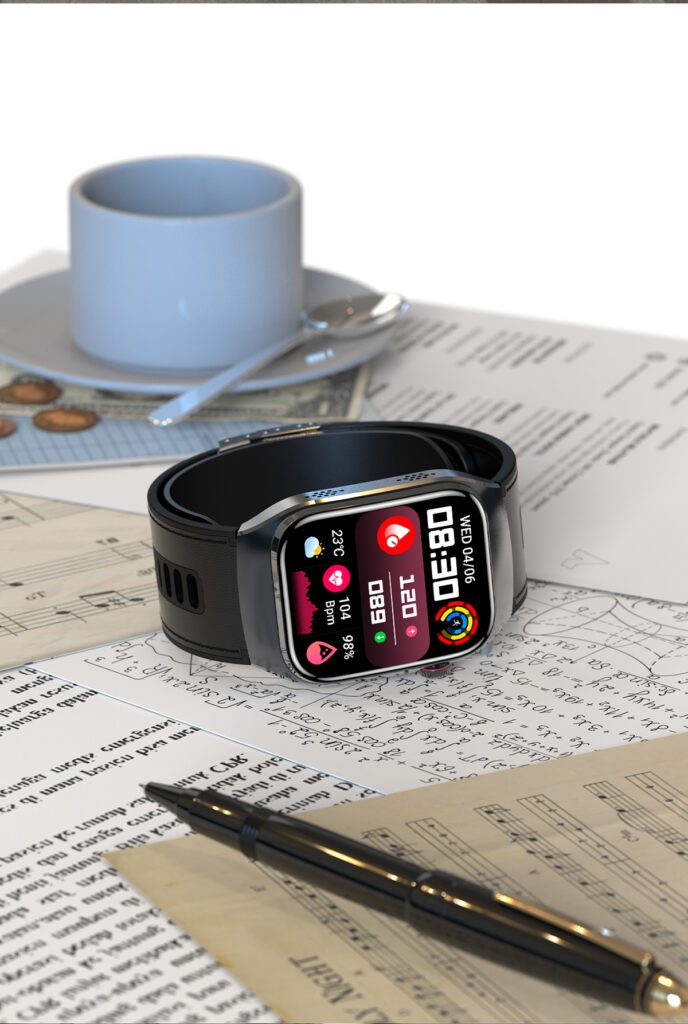
Quick Answer: How Do You Choose the Best Smartwatch in 2026?
Choose a smartwatch by matching five basics to the intended user: phone compatibility, battery life, comfort, communication features and the fitness or safety functions they will actually use. Health readings from ordinary consumer smartwatches are best treated as wellness trends, not diagnoses. B2B buyers should also validate the app, languages, documentation, packaging and sample consistency before approving a model.
Smartwatch Selection Checklist
| Priority | What to verify | Why it matters |
|---|---|---|
| Compatibility | iOS/Android version, app availability and permissions | A strong specification is useless if pairing is unreliable |
| Battery | Typical use, calling use, GPS use and charge time | Real workloads differ from standby claims |
| Comfort | Case size, weight, strap material and buckle | Comfort determines daily wear and data continuity |
| Communication | Bluetooth calling, notifications, SOS and cellular options | Different users need different levels of independence |
| Wellness | Heart-rate trends, sleep, activity and sensor limitations | Consumer readings should support awareness, not medical decisions |
| B2B readiness | Logo, packaging, app language, documents and inspection plan | These details determine whether a product can launch smoothly |
Important: Smartwatch wellness functions do not replace professional medical evaluation or emergency services.
Choosing the best smartwatch in 2026 starts with the intended user, phone and daily routine. A useful model should pair reliably, feel comfortable, last through the expected workload and make its main functions easy to use. Buyers should compare verified sample performance rather than relying only on a feature list.
1. Phone and App Compatibility
Confirm the supported iOS and Android versions, companion-app availability in the target country, required permissions and background-operation settings. Test pairing, notifications, data synchronization and reconnection after the phone or watch restarts.
2. Battery Life Under Real Use
Battery claims depend on screen brightness, always-on display, Bluetooth calling, GPS, sensors and notification volume. Compare typical mixed use, heavy use and standby separately, and record charging time with the supplied cable.
3. Display Readability and Controls
AMOLED can provide strong contrast, while LCD options may suit price-sensitive ranges. Check outdoor readability, touch response, font size, button placement and whether key functions remain clear to the intended user.
4. Comfort, Size and Strap Fit
Case dimensions, total weight, sensor shape, strap material and buckle design affect all-day wear. Test the same sample on different wrist sizes and confirm that the sensor can maintain comfortable, consistent skin contact.
5. Calling, Notifications and SOS
Bluetooth calling normally depends on a nearby paired phone. Cellular functions may require a compatible SIM, carrier and plan. For SOS models, verify the press sequence, contact limit, alert type, location behavior and what happens when connectivity is unavailable.
Compare current smartwatches with SOS functions and check each model’s exact workflow.
6. Fitness Tracking and GPS
Choose sports modes that match real customer activities. For outdoor use, test route acquisition, distance consistency and phone-connected versus built-in GPS behavior. Consumer activity estimates can vary with motion, fit and algorithm settings.
7. Wellness Sensors and Their Limits
Heart-rate, blood-oxygen, sleep and other wrist readings can support general wellness awareness, but ordinary consumer watches should not be presented as diagnosing or treating disease. Confirm the exact sensor configuration, app presentation and regulatory status for the destination market.
Browse smartwatches with blood oxygen measurement and review the specifications of the exact sample before ordering.
8. Durability and Water Resistance
Check the declared IP or ATM rating, test method and exclusions. Water resistance does not automatically cover hot showers, saunas, diving or high-pressure water. For outdoor models, request evidence for any claimed drop, temperature or environmental testing.
One current option is this IP67 smartwatch with SOS and activity functions; confirm live specifications before purchase.
9. Privacy, Updates and Data Handling
Review account creation, app permissions, cloud services, data deletion, firmware updates and the privacy policy. Camera, microphone, location and health-related data require especially clear user controls and destination-market review.
10. B2B Customization and Quality Control
For wholesale or private-label projects, confirm minimum order quantity, logo method, watch faces, case and strap colors, packaging, manuals, app languages and available compliance documents. Approve a complete pre-production sample and define inspection criteria before mass production.
Conclusion: Choose for the Real User
The best smartwatch is not the model with the longest specification sheet. It is the one that reliably fits the user’s phone, routine, comfort needs and priority functions. Compare samples under realistic conditions, document the results and verify all claims for the target market.
Questions B2B Buyers Should Ask Before Ordering
- Which hardware, firmware and companion-app version will be used for production?
- Which functions were tested on the target iOS and Android versions?
- What languages are available in the watch, app, packaging and manual?
- Which radio, battery and packaging documents are available for the destination market?
- How will logo, case color, strap, watch faces and packaging be approved?
- What criteria will be used during pre-shipment inspection?
Use our B2B smartwatch style guide to match the design to European and North American audiences, then follow the private-label smartwatch launch checklist before production. Buyers focused on safety features can also review smartwatches with SOS functions.
Frequently Asked Questions
How much battery life should a smartwatch have?
There is no universal target. Compare typical mixed use, Bluetooth calling, GPS and always-on display separately, then test the sample using the intended daily workflow.
Which smartwatch features matter most for older users?
Readable text, simple controls, charging convenience, calling and a clearly tested SOS workflow are often more useful than a long feature list.
Should importers choose the model with the most sensors?
Not automatically. App stability, comfort, documentation and consistent production quality can be more important than sensors the target user does not need.
