
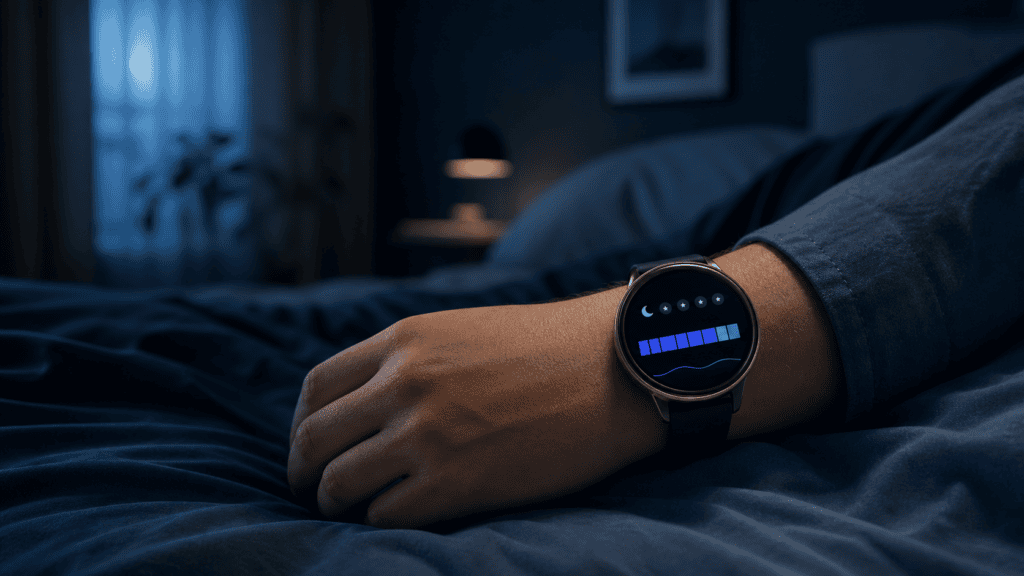
Quick Answer
Smartwatch sleep data estimates patterns from movement and optical signals. It can help users notice routines over time, but it is not a medical diagnosis and should not replace professional advice.
What Smartwatch Sleep Data Can and Cannot Show
| Signal or output | Useful for | Important limit |
|---|---|---|
| Wrist movement | Estimating rest, wake periods and sleep timing | Quiet wakefulness may be classified as sleep |
| Optical heart-rate trends | Adding overnight cardiovascular context | Fit, movement and skin contact affect the signal |
| Estimated sleep stages | Comparing broad patterns across multiple nights | A watch does not directly measure brain waves or eye movement |
| Blood-oxygen or breathing trends | Highlighting patterns worth discussing with a professional | Consumer readings do not diagnose sleep apnea or another disorder |
Source Notes
The CDC sleep resources provide general information on healthy sleep habits and when to seek advice.
A smartwatch can turn an ordinary night into a useful pattern of sleep duration, interruptions, resting heart rate, and estimated sleep stages. But how does a smartwatch track sleep when it never measures brain activity? The short answer is that it combines movement and optical heart-rate data, then uses an algorithm to estimate when you were awake, in light sleep, in deep sleep, or in REM sleep.
This guide explains what those readings mean, how accurate smartwatch sleep tracking can be, and how to get more consistent results from a wearable. It is written for anyone comparing a smartwatch with heart rate and sleep monitoring, not for people looking for a medical diagnosis.
How Does a Smartwatch Know You Are Sleeping?
Most sleep-tracking watches rely on two main sensors:
- An accelerometer detects wrist movement. Long periods of low movement suggest that you may be asleep, while frequent or sharp movement can suggest wakefulness.
- An optical heart-rate sensor shines light into the skin and measures changes in blood flow. Your heart rate and heart-rate variability normally change across the night, giving the algorithm more context than movement alone.
Some models add blood oxygen trends, skin temperature, breathing-rate estimates, or additional motion sensors. The watch combines these signals with the time of day and your usual sleep pattern. It then estimates when sleep began, when you woke up, and how the night was divided into stages.
A modern smartwatch sleep tracker may use these combined signals to add context beyond movement alone, but quiet wakefulness can still be classified as sleep. It is also why a loose strap, poor skin contact, or an almost empty battery can reduce the quality of the report.
What Do Light, Deep, and REM Sleep Mean on a Smartwatch?
A typical sleep report separates the night into awake time and three estimated stages:
Light sleep
Light sleep usually accounts for a large part of the night. Your muscles relax, your heart rate slows, and you become less responsive to your surroundings. A watch may classify a period as light sleep when movement is low but heart-rate patterns do not match its model for deeper stages.
Deep sleep
Deep sleep is associated with physical recovery and is generally harder to wake from. Wearables estimate it from a combination of very low movement and changes in cardiovascular signals. If you are wondering why your smartwatch shows little deep sleep, do not judge your health from one night. Strap fit, sensor contact, alcohol, stress, late exercise, and ordinary algorithm variation can all change the estimate.
REM sleep
REM sleep is linked with vivid dreaming, learning, and memory processing. The body is relatively still while heart-rate and breathing patterns may become more variable. A watch cannot directly observe eye movement, so a smartwatch REM sleep reading is an algorithmic estimate rather than a laboratory measurement.
How Accurate Is Smartwatch Sleep Tracking?
Consumer wearables are often useful for estimating total sleep time and identifying broad trends. Sleep-stage accuracy is more limited. A clinical sleep study uses sensors that can measure brain waves, eye movement, muscle activity, breathing, oxygen levels, and heart rhythm. A wristwatch works with a much smaller set of indirect signals.
That does not make the data useless. The best way to use it is to look for patterns across several weeks:
- Are you sleeping longer on days when you exercise earlier?
- Does your resting heart rate stay elevated after late meals or alcohol?
- Are frequent wake periods associated with room temperature, noise, or stress?
- Is your sleep schedule consistent on weekdays and weekends?
A wearable is a trend tool, not a diagnostic device. If you have persistent insomnia, heavy snoring, breathing interruptions, unusual daytime sleepiness, or other health concerns, speak with a qualified healthcare professional instead of relying on a watch score.
How to Improve Smartwatch Sleep Tracking Accuracy
If your watch records incomplete nights or inconsistent stages, these practical steps can improve the signal quality.
1. Wear the watch snugly, not tightly
The sensor should maintain steady contact with your skin without restricting circulation. A watch that slides around the wrist can introduce gaps and motion noise. Position it slightly above the wrist bone and use a comfortable strap suitable for overnight wear.
2. Charge before bedtime
Sleep tracking may stop when the battery becomes critically low. A short charge while showering or preparing for bed can be enough to cover the night. Buyers comparing the best smartwatch for sleep tracking and long battery life should check realistic multi-day use, not only the manufacturer’s maximum standby figure.
3. Confirm your personal settings
Age, height, weight, dominant wrist, typical bedtime, and heart-rate settings can influence the algorithm. Keep the companion app updated and verify that continuous heart-rate monitoring and sleep tracking are enabled.
4. Clean the sensor and keep skin dry
Lotions, sweat, dust, and moisture can interfere with optical readings. Wipe the back of the watch and dry your wrist before bed. Follow the manufacturer’s care instructions instead of using harsh cleaners.
5. Compare weekly trends instead of single nights
One unusual result may reflect restless movement, a loose strap, an update, travel, or an imperfect classification. A seven-day or 30-day view is more useful than reacting to every change in deep or REM sleep.
What to Look for in a Smartwatch With Sleep Monitoring
Sleep tracking is only helpful if the watch is comfortable and easy enough to wear every night. When choosing a model, compare these features:
- Comfort and weight: A lighter case and soft strap are easier to wear in bed.
- Battery life: Look for enough capacity to track a full night after normal daytime use.
- Continuous heart-rate monitoring: This gives the sleep algorithm more overnight context.
- Blood oxygen and breathing trends: These can add context, but they should not be treated as a diagnosis.
- Clear app reports: Weekly trends, bedtime consistency, wake periods, and exportable history can be more useful than a single “sleep score.”
- Phone compatibility: Confirm that the watch and app support your Android or iPhone version.
- No-subscription basics: If you want a sleep tracking smartwatch without a subscription, check which history and insights remain available without a paid plan.
For an overview of health-focused models, explore the SmartByHJ smartwatch collection. Buyers who want broader overnight and daytime health trends can also review this AI-enabled health-tracking smartwatch and compare its compatibility, sensors, comfort, and battery specifications with their needs.
Can a Smartwatch Detect Sleep Apnea?
A consumer smartwatch may flag patterns such as changes in blood oxygen, breathing, heart rate, or repeated waking. Those patterns can have many causes, and a wearable cannot by itself confirm sleep apnea. If a watch repeatedly shows unusual overnight readings—or if a partner notices loud snoring, gasping, or pauses in breathing—seek professional medical advice. A clinician can determine whether a validated sleep test is appropriate.
Does a Smartwatch Track Sleep Automatically?
Many current models detect sleep automatically after continuous wear, but setup varies. Some require a sleep schedule, a bedtime mode, or continuous heart-rate monitoring. Others can record naps only when they exceed a minimum duration. Check the watch settings after installation and review the first few mornings to confirm that sleep start and wake times are being captured.
Frequently Asked Questions
How does a smartwatch track sleep without knowing I am asleep?
It estimates sleep from low movement, heart-rate patterns, and sometimes blood oxygen, temperature, or breathing trends. The software compares these signals with models built from known sleep patterns.
Why does my smartwatch say I was awake when I was sleeping?
Movement, poor sensor contact, an irregular heart-rate signal, or the algorithm’s classification limits can create false wake periods. Adjust the strap, clean the sensor, and compare several nights before drawing conclusions.
Can I wear a smartwatch every night?
Many people do, provided the watch is comfortable, clean, properly fitted, and used according to its instructions. Remove it if you experience irritation, swelling, numbness, or discomfort.
Is deep sleep or REM sleep more important?
Both are normal parts of sleep and serve different functions. Rather than trying to maximize one stage based on a wearable estimate, focus on sufficient total sleep, a consistent schedule, and how rested you feel.
What is the best smartwatch for sleep tracking?
The best choice depends on comfort, battery life, phone compatibility, sensor consistency, app clarity, and whether useful reports require a subscription. Choose a model you can comfortably wear every night and evaluate trends rather than one-off scores.
Sleep-Tracking Validation Checklist for B2B Buyers
- Run multi-night tests on different wrist sizes and compare missing or fragmented records.
- Confirm whether sleep tracking, naps, heart-rate trends and history require specific settings or a subscription.
- Test the exact production app on the target iOS and Android versions and languages.
- Record overnight battery use with continuous heart rate, notifications and other intended functions enabled.
- Review how wellness limitations are stated in the app, manual, packaging and sales materials.
- Approve the production sensor, firmware, strap and companion-app version together.
Importers can also use our smartwatch battery testing checklist and smartwatch supplier guide before approving a bulk order.
The Bottom Line
A smartwatch tracks sleep by combining movement with heart-rate and other sensor trends. It can be valuable for understanding bedtime consistency, total sleep, interruptions, and long-term changes. Its sleep stages remain estimates, so use them as prompts for better habits—not as medical conclusions.
Start with a comfortable fit, reliable overnight battery life, and a week or more of consistent use. The most useful sleep tracker is not the one with the most dramatic score; it is the one that helps you notice repeatable patterns and make practical changes.
