
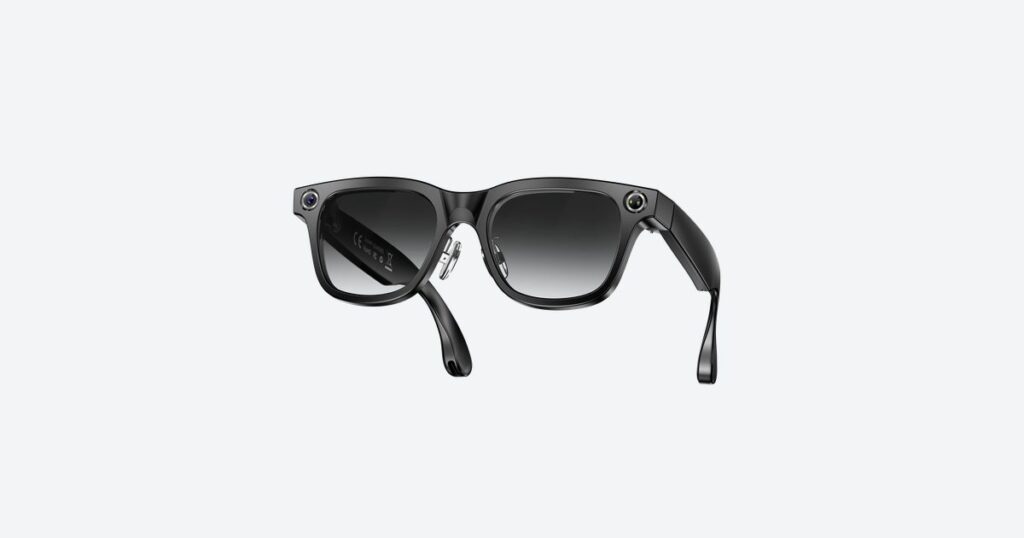
Quick answer: B2B smart glasses buyers should compare camera quality, audio, battery life, comfort, app compatibility, privacy controls and OEM support before choosing a supplier. The right product depends on the target market, use case and required level of customization.
Why smart glasses are becoming a B2B opportunity
Smart glasses combine an eyewear frame with practical electronics such as a camera, microphone, speakers and wireless connectivity. For distributors, retailers and private-label wearable brands, they can support hands-free communication, first-person content creation, travel, retail demonstrations and selected professional workflows.
The strongest B2B opportunity is not simply selling a new gadget. It is matching a reliable wearable platform with a clear customer scenario and a repeatable supply chain.
What are smart glasses?
Smart glasses are wearable glasses with built-in electronic functions. Depending on the design, users may capture photos or short videos, listen to audio, answer calls, record voice notes, receive voice prompts or connect with a smartphone app.
Some products focus on audio and calling, while others emphasize camera capture, translation support or outdoor use. Buyers should select features according to the market instead of relying on one headline specification.
1. Camera performance and content creation
Camera-enabled smart glasses are attracting interest from creators, travelers, retailers and outdoor users. When reviewing a model, ask about image resolution, video output, stabilization, low-light performance, storage, file transfer and app support.
- Confirm whether photos and videos transfer through an app or cable.
- Check whether the recording indicator is visible during use.
- Request sample footage instead of judging quality from resolution alone.
- Ask whether the frame, app logo and user guide can be customized.
2. Audio, microphone and calling
Open-ear audio lets users hear music, prompts or calls while remaining aware of their surroundings. For wholesale projects, test speaker clarity, microphone pickup, wind-noise handling, Bluetooth stability and call switching.
A product that looks attractive but performs poorly during calls can create returns and negative reviews. Sample testing is an essential step before a large order.
3. Battery life and charging
Battery experience affects customer satisfaction. Compare typical usage time, standby time, charging method, charging protection, charging time and battery information required for shipping.
Actual runtime changes with camera use, call duration, audio volume and app activity. Marketing copy should describe realistic use conditions instead of promising one fixed result for every customer.
4. Comfort, frame design and lens options
Smart glasses must remain comfortable during normal daily wear. Electronics should not make the frame too heavy or unbalanced.
- Overall weight and nose-pad comfort
- Pressure on the temple arms
- Heat during charging or extended use
- Frame size, hinge durability and lens options
- Compatibility with prescription lenses where applicable
Several frame colors or lens options can help a private-label brand build a consistent product family for different markets.
5. App compatibility and onboarding
Many smart glasses rely on a mobile app for setup, file transfer, firmware updates or device management. Before importing, confirm Android and iOS support, app language options, account requirements, firmware updates, app-store availability and privacy documentation.
A clear onboarding process is especially valuable for retailers serving first-time wearable users.
Business applications for smart glasses
Remote assistance
In selected workflows, hands-free audio or first-person capture may help technicians and service teams communicate while keeping both hands available.
Logistics and warehouse operations
Voice prompts or quick image capture can support specific warehouse tasks where workers should not constantly handle a phone. Suitability should be validated in the real environment.
Retail demonstrations
Electronics and lifestyle retailers can use smart glasses as a demonstration product for wearable technology displays and promotional campaigns.
Travel, outdoor and creator markets
Camera and audio features appeal to travelers, cyclists, hikers and content creators. Comfort, battery performance and simple file transfer are important purchase factors in these segments.
How to choose a smart glasses supplier
A reliable supplier should provide more than product photos. Ask for complete specifications, sample units, app information, battery details, packaging data, customization scope, user manuals, quality-control procedures, compliance documents for the destination market, warranty terms and production lead time.
- Define the target customer and sales channel.
- Test samples for comfort, audio, camera and connectivity.
- Confirm the exact customization scope in writing.
- Approve packaging, labels and manuals for the target market.
- Set inspection standards before production.
OEM and private-label opportunities
Depending on the supplier, customization may include logo printing, frame color, packaging, user manuals, startup screens, app branding, retail labels and marketing assets. Some factories support only packaging and logo work, while others can provide deeper hardware or software changes.
For many distributors, starting with a tested standard configuration and customizing the brand identity is the fastest way to validate demand.
Privacy and responsible marketing
Camera and microphone functions require responsible communication. Product pages should explain when recording is active, how recording is indicated, where files are stored and how users can transfer or delete them. Users should respect local privacy laws and obtain consent where required.
Smart glasses should be described as consumer or professional wearable technology. Avoid claims that imply medical diagnosis, guaranteed safety or replacement of regulated equipment.
Frequently asked questions
Are smart glasses suitable for wholesale?
Yes. They can be sold through electronics distributors, lifestyle retailers, online stores, promotional programs and private-label wearable brands. The right configuration depends on the target market.
Can a company logo be added?
Many suppliers support logo printing, custom packaging and branded manuals. App or hardware changes should be confirmed before ordering.
Do smart glasses need a smartphone?
Many products use a smartphone for setup, calling, file transfer or app controls. Buyers should confirm the exact connection method and operating-system requirements.
Are camera smart glasses legal in every country?
Privacy and recording requirements vary by country. Importers and users should review the rules that apply in their target market.
What is the recommended B2B order process?
A typical process includes product selection, sample testing, specification confirmation, packaging approval, order placement, production inspection and shipment.
Final takeaway
Smart glasses are developing into practical platforms for communication, content creation and hands-free applications. The best sourcing decision is based on real usability: camera and audio performance, comfort, battery life, app support, privacy and customization all influence long-term market performance.
Explore the SmartByHJ smart glasses collection or contact our team through the B2B inquiry page to discuss wholesale, OEM and private-label requirements.
