
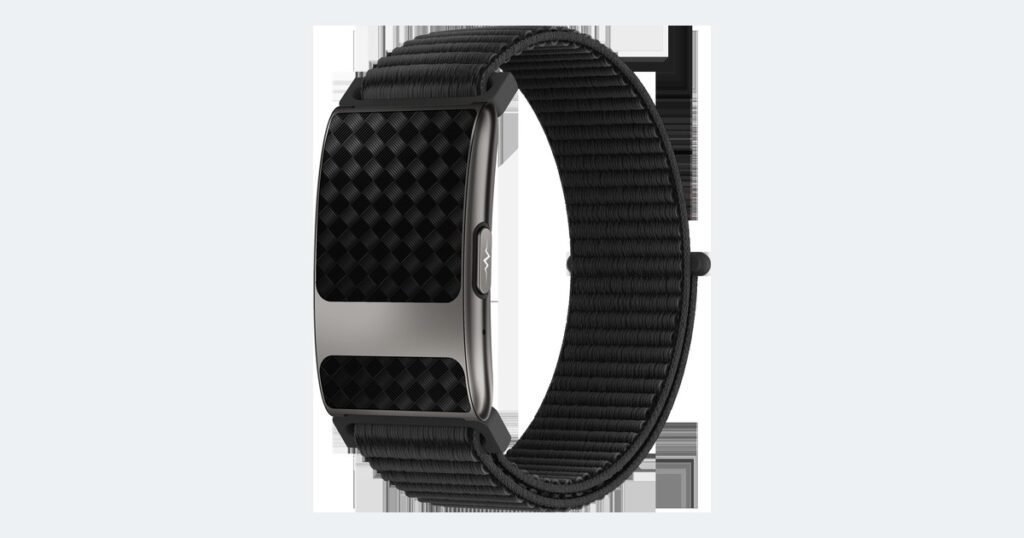
Quick answer: A screen-free fitness bracelet is a practical option for buyers who want a low-distraction wearable that relies on a mobile app rather than a bright wrist display. For private-label programs, evaluate comfort, app workflow, battery performance, data claims and destination-market documentation before placing an order.
For B2B buyers, a screen-free fitness tracker wholesale program can open a distinct wearable category: discreet enough for all-day wear, light enough for active users and flexible enough for private-label packaging. Unlike a display-first smartwatch, the user checks records and settings through a companion app, while the band focuses on sensor-based activity and wellness functions.
Why Screen-Free Fitness Bracelets Appeal to Buyers
Many customers do not want another glowing screen competing for attention. A screen-free design can feel more like an everyday accessory while still supporting activity records, reminders and app-based review. It is a useful positioning for wellness retailers, active-lifestyle distributors, employee-gift programs and brands building an entry-level or minimal-tech wearable range.
- Low-distraction wear: no display notifications during meetings, training or rest.
- Comfort-led product story: a compact body and woven strap can suit continuous daily use.
- App-led data review: users can view trends and settings on a compatible phone.
- Private-label potential: logo, packaging, color mix and market documentation can be planned around the buyer’s channel.
What to Check Before Sourcing a Screen-Free Fitness Tracker
1. App compatibility and data workflow
Ask how users pair the band, which phone systems are supported, how data is presented and whether the app language set fits your launch market. The SmartByHJ platform is specified for Android 8.0+ and iOS 12.0+, uses Bluetooth LE 5.3 and supports multilingual app interfaces. Confirm current app behavior on production samples before writing customer-facing claims.
2. Everyday hardware details
Small details influence reorder rates. This platform measures 44 × 26 × 8 mm, uses magnetic charging and has a stated 180mAh polymer battery with typical runtime of approximately 3–5 days, depending on functions used. It is listed as IP68-rated and available with black, grey or pink woven straps. Buyers should independently test charging, comfort, app pairing and water-resistance expectations on samples.
3. Fitness and wellness positioning
The supplied specification lists step, calorie and distance records, multiple sports modes, sleep, heart-rate, blood-oxygen, temperature, HRV and stress-trend functions, plus an ECG feature. These functions should be positioned as general fitness and wellness information—not clinical measurement, diagnosis or treatment. Exact claims must match the final hardware, app version, test evidence and regulations in the destination market.
4. Alerts and daily-use features
Call and message alerts, alarm, sedentary reminders, cycle-tracking functions and OTA updates can strengthen an app-led wearable program. They are best described as convenience features. Before launch, buyers should confirm notification permissions, language behavior and compatibility across the phone models their customers use.
How to Build a Private-Label Program
- Define the target user: active adults, minimalist-tech customers, wellness retailers or corporate gifting.
- Request samples and test fit, strap finish, Bluetooth pairing, charging and relevant app functions.
- Choose the color assortment and decide where logo artwork will appear: packaging, documentation or product hardware where supported.
- Review battery, wireless, labeling, privacy and wellness-claim requirements for each sales region.
- Approve packaging artwork, accessories, quality checks and after-sales workflow before production.
SmartByHJ can support sourcing discussions for OEM fitness bracelets, private label wellness trackers and screen-free activity bands. Explore the screen-free fitness and wellness tracking bracelet with ECG feature for product details, or browse our wearable monitoring collection.
Health, Privacy and Market-Access Checklist
Wellness wearables require careful product communication. Do not turn a consumer tracking feature into a medical promise. In the United States, the FDA’s general wellness policy is a helpful starting point for understanding the difference between low-risk wellness positioning and medical-device claims. It does not replace legal or regulatory advice. Buyers should also review the requirements for wireless functions, data handling, batteries, packaging and product labeling in every market where they sell.
Important notice: This product is intended for general fitness and wellness tracking only. It is not a medical device and must not be used to diagnose, treat, cure or prevent disease, or to make health decisions without a qualified healthcare professional.
Frequently Asked Questions
What is a screen-free fitness bracelet?
It is a wearable without a traditional wrist display. The user relies on a companion app for settings and for viewing recorded activity and wellness information.
Can a screen-free band work for private-label sales?
Yes, provided the supplier and buyer agree on packaging, color options, logo treatment, documentation, quality control and market-specific requirements before production.
Does an ECG feature make a fitness bracelet a medical device?
Not automatically. Classification and allowed claims depend on the product, evidence and local regulations. Avoid diagnostic claims unless they are supported and authorized for the intended market.
What should buyers test on a sample?
Test comfort, strap durability, phone pairing, charging, app flow, notification behavior, runtime and every claim you plan to use in your own product listing.
Conclusion
The strongest screen-free fitness bracelet program is built around honest positioning: discreet all-day wear, app-led activity and wellness tracking, careful market documentation and a tested private-label workflow. For buyers who want a less distracting alternative to a display-first smartwatch, the SmartByHJ platform offers a focused starting point for sample evaluation and OEM planning.
