
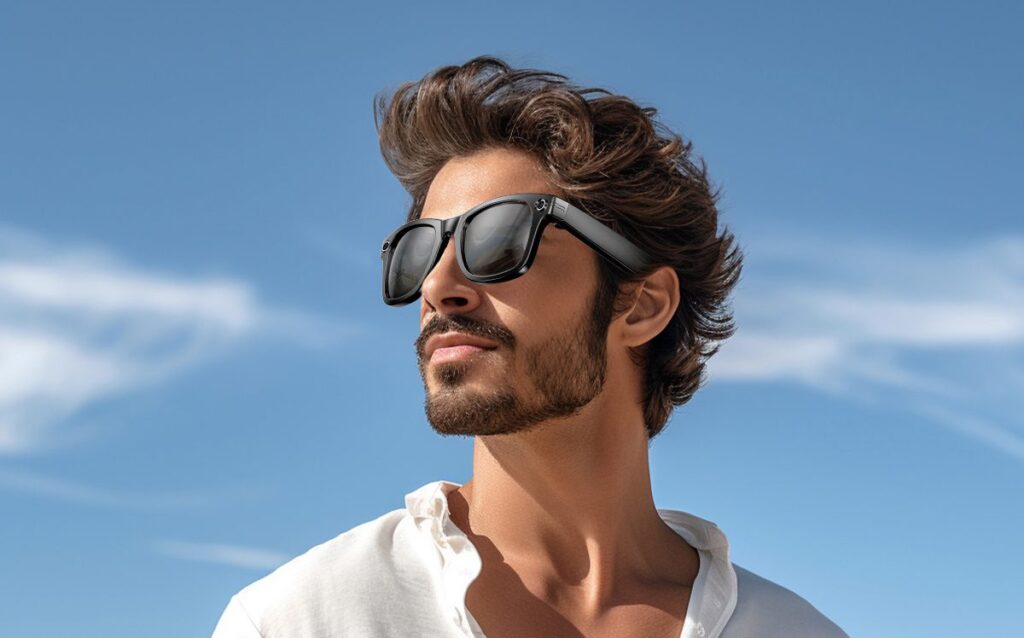
Quick Answer: Which Smart Glasses Are Best in 2026?
The best smart glasses in 2026 depend on the job they need to do. Audio smart glasses suit calls and open-ear listening, camera glasses support hands-free photo and video capture, and AI-enabled glasses can add voice assistance, translation or image recognition through a connected app. Buyers should compare comfort, battery life, privacy controls, app support and after-sales service instead of choosing by feature count alone.
Best Smart Glasses of 2026 by Use Case
| Use case | Best-fit type | Features to check |
|---|---|---|
| Calls, music and commuting | Open-ear audio glasses | Microphone clarity, speaker leakage, controls and battery runtime |
| Travel and content capture | Camera smart glasses | Camera resolution, storage, stabilization, privacy indicator and export workflow |
| Translation and voice assistance | AI smart glasses | Supported languages, app availability, response speed and subscription terms |
| Outdoor and driving use | Smart sunglasses | UV protection, polarized lens options, fit and wind-noise control |
| Private-label product lines | OEM/ODM smart glasses | Logo, packaging, firmware, documents, MOQ and quality control |
Smart glasses are not one single product category. Some focus on audio, some add a camera, and a smaller group includes a display. Before comparing products, confirm whether the user needs hands-free communication, content capture, AI assistance or visual information in the lens.
1. Open-Ear Audio Smart Glasses
Audio smart glasses place small speakers in the temples so users can hear calls, navigation prompts and music without putting an earbud inside the ear. They are popular for commuting, office calls and light outdoor activity because they keep the ears open to surrounding sound.
Important checks include microphone performance in wind, sound leakage in quiet rooms, Bluetooth stability, control placement and real-world battery life. For international markets, voice prompt languages and app compatibility should also be confirmed during sampling.
2. Camera and AI Smart Glasses
Camera smart glasses are designed for hands-free photos, short videos and point-of-view recording. AI functions may include voice questions, image recognition or translation, but the exact experience often depends on the companion phone, application and cloud service.
Do not assume that every product advertised as AI eyewear has a display or performs all processing on the glasses. Ask which functions work offline, which require a phone, whether a subscription is needed, and where captured media is stored.
See a current example of AI smart glasses with a camera, or read our guide explaining what smart glasses are and how they work.
3. Lens Options and Everyday Comfort
Electronics are only half of the product. Smart glasses must also work as comfortable eyewear. Frame weight, temple pressure, bridge fit and balance affect whether users can wear them for hours. Buyers may need clear lenses, blue-light filtering lenses, polarized sunglasses or prescription-ready frames.
Request physical samples in the intended lens configuration. A lightweight specification does not guarantee good comfort if the battery and camera create uneven weight distribution.
4. Battery Life and Charging
Battery claims should be separated into standby time, music playback, call time and camera recording time. These workloads consume power at different rates. Verify the charging method, full-charge time, low-battery alerts and whether replacement charging cables can be supplied.
For wholesale projects, include a repeatable battery test in the sample approval and pre-shipment inspection plan. The goal is consistent performance across a production batch, not a single ideal result.
5. Privacy and Responsible Use
Camera-equipped eyewear should provide a clear recording indicator and straightforward controls. Brands should explain responsible use in manuals and product pages. Local rules for recording, workplace use and data protection vary, so importers should review requirements for each target market.
For AI features, confirm what data the companion app collects, where it is processed, and how users can delete recordings or account data.
How B2B Buyers Should Evaluate a Smart Glasses Supplier
- Define the use case: audio, camera, translation, AI assistance or display.
- Approve a controlled sample: record the hardware, firmware, app version, accessories and packaging.
- Test the complete workflow: pairing, calls, media transfer, language support, charging and reset procedures.
- Review documentation: request applicable radio, battery, material and packaging documents for the destination market.
- Confirm customization: logo location, frame color, lens option, startup prompt, manual and retail box.
- Define inspection criteria: cosmetic limits, functional checks, battery sampling and packaging requirements.
Importers planning a branded line can use our private-label wearable launch checklist as a project template.
Frequently Asked Questions
Do all smart glasses include a display?
No. Many smart glasses are audio or camera products without an in-lens display. Always confirm the hardware architecture.
Can smart glasses work without a phone?
Some basic functions may work independently, but calling, translation, AI assistance and media synchronization commonly require a paired smartphone and companion app.
What is the most important feature for all-day use?
Comfort is usually the first filter. More functions do not help if the frame is heavy, unbalanced or difficult to charge.
Are smart glasses worth buying?
They can be worthwhile when the use case is clear. Read our analysis of whether smart glasses are worth buying.
Final Buying Advice
Start with the user’s main task, shortlist the appropriate product type, and then validate comfort, battery, app support and privacy. B2B buyers should approve a complete sample configuration before bulk orders. For OEM or wholesale inquiries, contact SmartByHJ with your target market, functions, quantity and customization requirements.
