
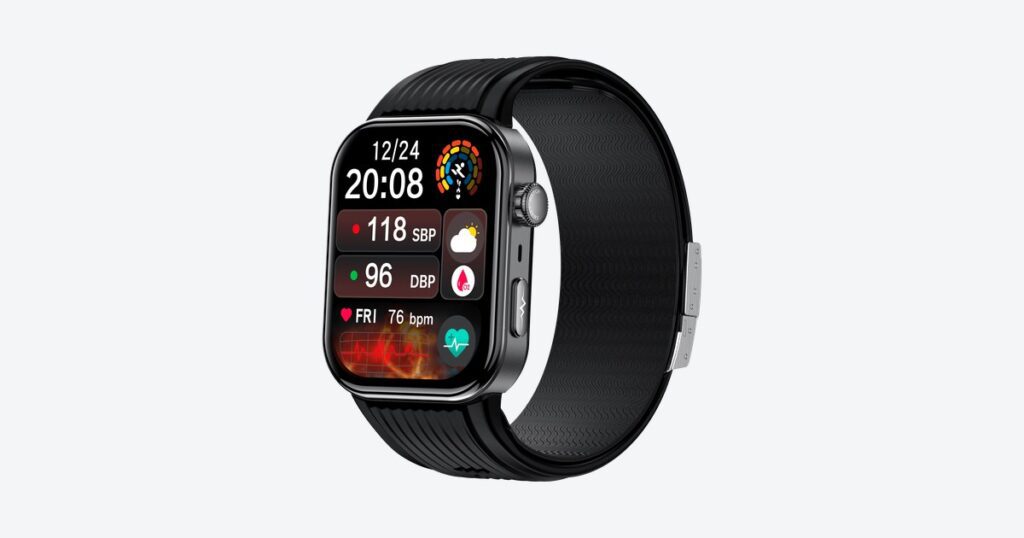
Quick answer: An air-pump smartwatch uses an inflatable section in the wristband to apply pressure around the wrist, making its measurement method different from optical-only wellness watches. For importers and private-label buyers, the key question is not whether the feature sounds medical, but whether the supplier can provide repeatable test data, clear intended-use wording, stable cuff fit, app compatibility and the documents required for the target market.
Important: This article is for product sourcing and general education. A smartwatch should not be used to diagnose, treat or manage a medical condition, and it does not replace a validated upper-arm blood pressure monitor or advice from a qualified healthcare professional.
What Is an Air-Pump Smartwatch?
An air-pump smartwatch integrates a miniature pump and inflatable airbag into the strap. During a reading, the strap tightens around the wrist while sensors collect pressure-related signals. This is mechanically different from watches that use only photoplethysmography, or PPG, to estimate wellness trends.
The SmartByHJ product featured in this guide combines an air-pump strap with a 1.952-inch AMOLED display, full-screen touch control, Bluetooth 5.3, a 400 mAh battery, magnetic charging and Android/iOS app support. Buyers can review the complete air-pump smartwatch product page and request the latest specification sheet before sampling.
Why B2B Buyers Are Evaluating This Category
Health-oriented wearables can help distributors build a differentiated range for wellness, senior-friendly retail and corporate health programs. An inflatable wristband creates a clear demonstration point at trade shows and in retail training. However, it also adds mechanical, fit, labeling and regulatory questions that a standard fitness watch may not have.
Air-Pump Versus Optical-Only Wellness Watches
| Buyer question | Air-pump design | Optical-only design |
|---|---|---|
| Measurement method | Inflatable wrist pressure plus sensors | PPG-based signal analysis |
| Strap requirements | Fit and airbag position are critical | Consistent skin contact is critical |
| Sample testing | Pump cycles, leakage, fit and repeatability | Optical signal quality and algorithm consistency |
| User training | More detailed positioning instructions | Usually simpler, but still requires correct wear |
| Claim risk | Higher if marketed as diagnostic or medical without evidence | Also high if wellness estimates are presented as diagnosis |
Seven Checks Before Approving a Sample
1. Define Intended Use and Target Market
Decide whether the product will be positioned as a general wellness wearable or under a regulated medical-device pathway. Claims, labeling, evidence and market access requirements change significantly between these two positions. Do not allow packaging or listings to use phrases such as medical-grade, hospital-equivalent or clinically accurate unless the appropriate evidence and approvals support them.
2. Test Fit Across Wrist Sizes
The airbag must sit in the intended position and inflate consistently. Include small, medium and large wrists in wear trials. Record strap hole or adjustment position, comfort, movement during inflation and whether users can follow the instructions without assistance.
3. Compare Repeatability, Not a Single Demonstration
A single reading is not enough for sourcing approval. Use a written protocol with repeated measurements under controlled conditions. Record the reference device, rest time, body posture, wrist position, device order and time interval. Ask the supplier to explain how firmware versions and calibration affect results.
4. Run Pump and Airbag Durability Tests
Request lifecycle testing for pump operation, valves, tubing, airbag seams and strap attachment. Inspect for slow leaks, noise changes, incomplete deflation and comfort issues after repeated cycles. Confirm how replacement straps are controlled because the airbag is part of the measurement system.
5. Review the App and Data Handling
Test pairing, account creation, data synchronization, firmware updates, unit selection, language quality and data deletion. For Europe, ask how personal data handling aligns with GDPR responsibilities. Avoid collecting more health-related data than the commercial use case requires.
6. Verify Battery, Charging and Environmental Performance
Check battery duration using a defined test profile that includes display time, Bluetooth connection and air-pump readings. Verify charging temperature, magnetic connector stability and packaging transport requirements. Treat IP67 as a laboratory ingress rating, not permission to operate the air pump underwater.
7. Audit Instructions and Claims
Instructions should explain rest time, posture, wrist height, correct strap tension, situations that may affect readings and when users should consult a healthcare professional. The American Heart Association recommends validated upper-arm cuff devices for home monitoring and emphasizes correct technique; wrist-based devices require especially careful positioning.
Documents to Request From a Supplier
- Current product specification and approved component list
- Firmware and app version records
- Battery and transport documentation, including UN 38.3 where applicable
- Relevant EMC, radio and substance-compliance reports for the destination market
- Risk assessment, user instructions and packaging artwork
- Pump, airbag and strap lifecycle test reports
- Measurement test protocol and raw results, not only a marketing summary
- Privacy policy and data-flow description for the companion app
For a broader launch workflow, use our private-label smartwatch launch checklist and smartwatch supplier selection guide.
Sample Evaluation Plan for Importers
- Freeze the hardware, strap, firmware and app version.
- Prepare a test group representing intended wrist sizes.
- Use the same written measurement procedure for every participant.
- Run repeated readings and record failures or error messages.
- Cycle the pump and inspect airbag leakage and strap wear.
- Test Android and iOS pairing, updates and data deletion.
- Review all packaging claims with compliance advisers.
- Approve a signed production-equivalent sample before mass production.
Who Is This Product Best Suited For?
This category may suit B2B buyers building wellness-focused private-label ranges, pharmacy-adjacent consumer electronics assortments, senior-friendly wearable collections or corporate wellness programs. It is less suitable for projects that cannot support user education, after-sales service, app maintenance and careful claim review.
Frequently Asked Questions
Does an air-pump smartwatch replace an upper-arm monitor?
No. It should not replace a validated upper-arm device or professional medical advice. Buyers must define intended use and claims carefully.
What is the most important sourcing test?
Repeatability under a written protocol is more useful than a one-time demonstration. Fit, wrist position, firmware and the reference method must all be controlled.
Can SmartByHJ customize the watch for private label?
Customization may include branding, packaging, language and commercial configuration, subject to quantity, technical feasibility and compliance review. Send the target country, channel, estimated volume and claim requirements through the product inquiry form.
What should European and North American buyers check first?
Start with intended use, radio and battery documentation, labeling, app privacy, claim substantiation and the exact configuration represented by test reports.
Authoritative References
- American Heart Association: Home Blood Pressure Monitoring
- U.S. FDA: Software as a Medical Device
- European Commission: Medical Devices Sector
Talk to SmartByHJ: For a sample, OEM/ODM discussion or compliance-document checklist, send your B2B inquiry with target market, expected quantity and required functions.
